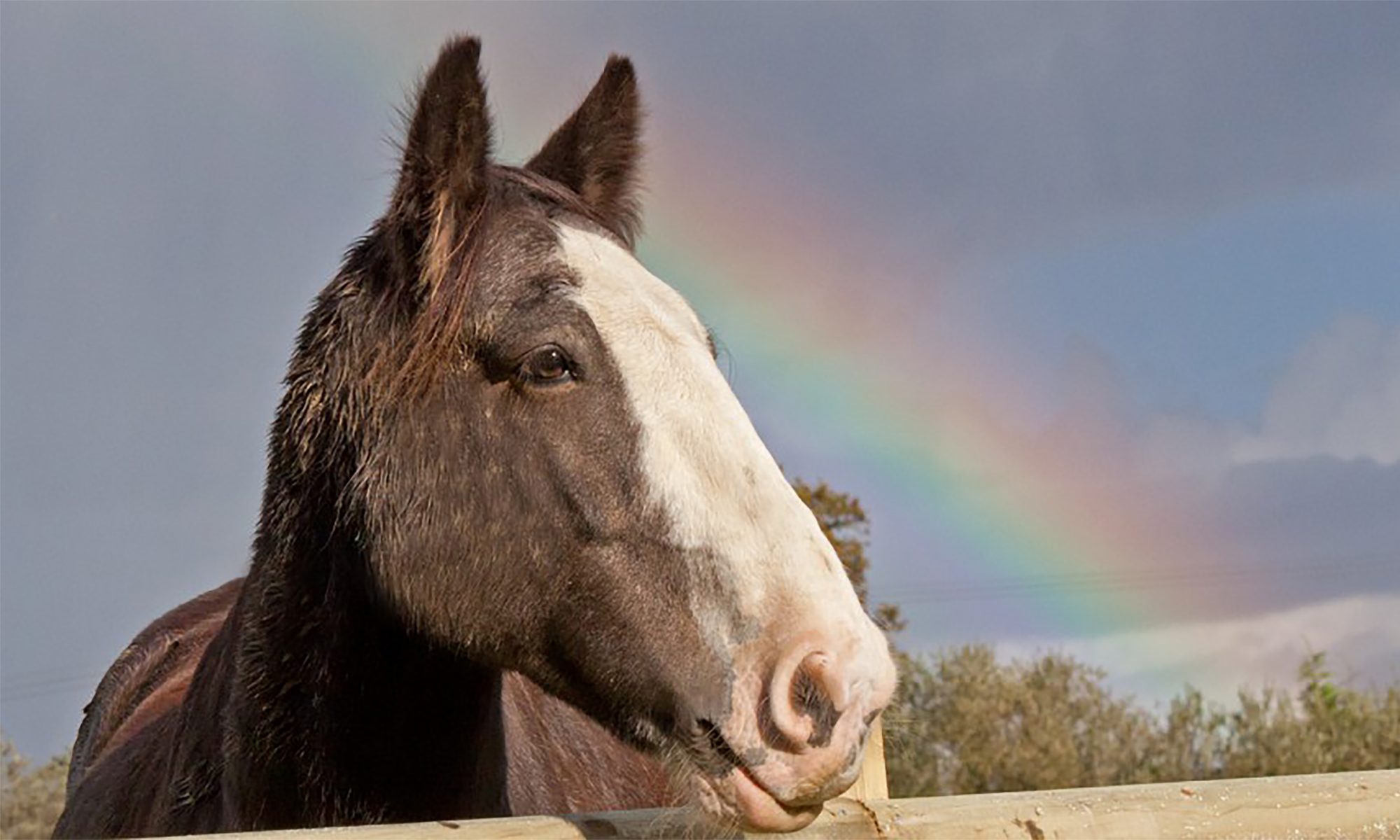
To commence reward based training with Mojo I have first to classically condition the bridge signal. A bridge signal is to tell the horse he has done the correct behaviour, it is applied as soon as the behaviour we want occurs – the reward can then be given once the horse is calm and relaxed e.g not mugging or looking for the reward.
To condition the signal we start with the unconditioned stimulus(UCS) (food or scratches etc) and get an unconditioned response (UCR) – the horse accepting the reward. We then pair the UCS with a neutral stimulus (NS) (the bridge signal) – this can be a verbal noise or a clicker. The NS then becomes a conditioned stimulus and the UCR becomes a conditioned response as it becomes associated with the reward. So the bridge signal says “yes that is what I want”.
I decided to use a clicker to mark as a bridge signal.
Day 1
My first clicker session with Mojo didn’t go too well. My aim was to classically condition him to the clicker – so pairing the sound with the reward. However poor Mojo jumped and ran off when I clicked, it was a rather loud clicker – so now I have a softer sounding one to use to desensitise him to the sound before going any further.
Day 2
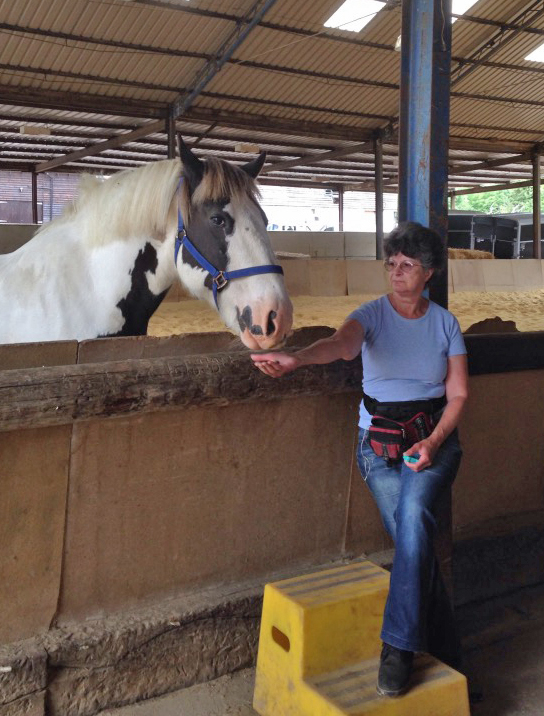
I have just been down to see him and his owner was there so we took him to the indoor school and I tried with the quieter clicker and he was fine. A few times with that and I tried the louder one and again no reaction apart from looking for a treat. I got him to stand nice and calm with his head straight. So I now feel happier about it all.
For more information about the terms used here Karen Pryor as a list which I found useful.
Jo Hughes is in the process of making a video to show how to get the head straight and to help with impulse control – so I will watch that before doing any more with Mojo. I am away for a week so will recommence once I come back. Mojo is out in the field all day and night, so is enjoying just being a horse with his friends. I will of course go and see him in the field before I go.
 Positive Horsemanship.