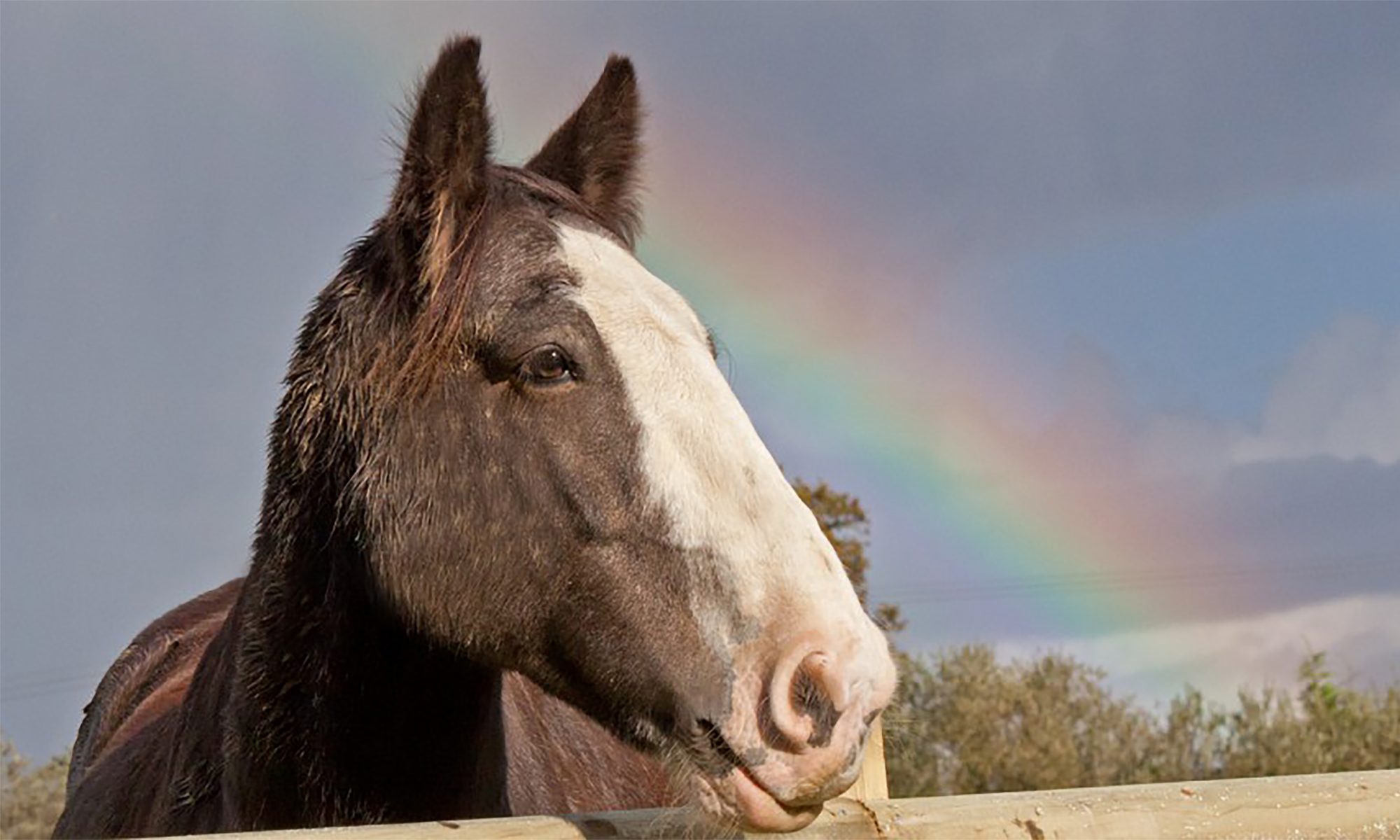
Mojo is pain free now after his Equine Touch therapy, so it is back on track with his saddle desensitisation.
I have been able to put on his numnah and surcingle with no problems, so a few days a ago I tried his saddle again. He was fine with having it on and the girth fastened and walking around with it on.
He still needs to be happy to stand at the mounting block so that is what we did today. Just with his surcingle on, it took a few attempts to get it fastened due to my clumsiness!
We got there in the end and I was very pleased with him.
Sorry for my very dusty pony!
Mojo Agility and Barrel Pushing.
Mojo October 23rd 2015
We did the barrel again today – trying to remember to feed at arms length – not sure I did that all the time. Mojo remembered he had to push the barrel, we started with 3 repetitions of 1 push and got up to 3 repetitions of 3 pushes. We finished there as I used the short side of the school and we had run out of space. Made a big fuss of him and gave him a jackpot feed.
Then I put him in the stable with his hay net (so we don’t get expelled for making a mess in the sand school)!
I put out the agility course I want to do for the Fair Horsemanship Challenge. The only thing I got wrong was not walking over the tarp with him. To do that I may need a bigger tarp, but I was very pleased with Mojo. A bit sticky through the cones but we went back and did them again afterwards and he was perfect. I may need some help with the proper video as the umbrella opening was only just in the frame. It has been a lot of fun though training each obstacle and then putting it all together.
Then came the fun bit – he has been very sticky leaving the barn and going back to the field. So we made it a fun game today – thanks Jo Hughes for the suggestion. Who would have thought a flag on a carrot stick could be so exciting.
Targeted high, targeted low and did hip over, circles and some nice shoulder-in. Mojo did not even notice the mini tractor mowing the golf field. He only grass dived twice and came straight back up to continue playing the game.
Mojo, the barrel and frustration.
I have just finished a shaping course with Jo Hughes and Carolyn Jenkinson of The Academy of Positive Horsemanship
Mojo was much more animated during this course than the last one, he got quite frustrated too when the rewards were not forth coming. I waited for a behaviour I wanted on the 3rd day and Mojo decided that was not a good idea.
I now need (with Jo Hughes help) to improve his impulse control and put the mugging on an extinction program.
Otherwise he is good with following the target and doing the agility obstacles. The umbrella was no problem when I opened and closed it several times. He couldn’t wait to stand on the tarp and his staying still on the mat is better. I now need solid cues for all these behaviours.
Then onwards with the foot lifiting – he did hold it up for a few seconds last time and I need to do this everyday and be consistent and not reward his pawing and stomping.
This is a video of him with the umbrella.
Mojo update
I went on a course last weekend about neuranatomy – really interesting and lots to remember and relate to how our horses feel about various stimuli.
At this talk I arranged with Heather Richardson of Amberly Aromatics to come and do an Equine Touch treatment with Mojo.
We started with history taking,after that Heather offered Mojo some aromatherapy oils – first carrot seed which he seemed to quite like, but the camomile was really exciting. Mojo was very intent on inhaling and there was a large Flehman response. (The flehmen response acts with the vomeronasal organ (Jacobsons organ) near the palate to amplify smells.) So he was getting a good dose, then he licked some from Heather’s hand.
Then walked I him up and down so Heather could assess his gait. Mojo appeared to be stiff and had an assymetrical pelvis.
We had to counter condition the Equine Touch treatment as Mojo was finding it a bit too much, so good to have a therapist who has knowledge of learning theory and how aversive stimulation affects emotions. Heather gave some red light treatment and has sent me a link to some research so I know the science behind how it works. It is all on her website so why not take a look.
We now have exercises for the next 2 weeks before Heather comes back to assess.
I am sure Mojo will begin to feel better very soon and we can then counter condition the saddle again, after it is correctly fitted – I intend to get Julie Knaggs ( a Lavinia Mitchell saddle fitter) out once Mojo has the all clear.
Mojo Trotting
I have struggled to get Mojo a bit more animated when following a target, probably due to me not going fast enough. So my daughter came to help today, we put 2 cones out as he stations nicely at these and then she got him to follow the target stick and upped the reinforcement for trotting, he was getting quite lively towards the end. However Liz can run faster than I can so I need to get his trotting on a cue so he can trot to the cones by himself.
Before this he was very wary meeting a new person, a few big startle responses as Liz touched him, but he soon decided she was trustworthy and really seemed to enjoy the session.
When you have a horse who is nervous like Mojo you have to go slowly and desensitise to so much. It is like starting a horse from the beginning. Restarting often takes much longer than starting a youngster with no experience of aversive methods.
Counter Conditioning
Counter conditioning alongside systematic desensitisation is very powerful. If we do slow desensitisation we can get horses accepting of aversive stimuli, but if we pair that with an appetitive – food or scratches or anything the horse values and wants more of – then we can change how they feel about the aversive. It can even become something they want, rather than something they just tolerate.
Too often we halter horses and spray them, clip them etc, without thinking about how the horse feels, horses sometimes provide a lot of feedback in the form of pulling away, fidgeting or even being openly petrified, but often they just shut down as they feel they can’t say “no”. So what do some people do in those scenarios were they acknowledge the horse has a problem? They may hold them tighter, tell them off and even sedated them to be clipped.
How much better is it to take time to desensitise and counter condition? Well Mojo was petrified of fly spray, the first time I sprayed him was in his stable and he nearly squashed me against the wall he spooked so much.
What did I do about it? Well I started systematic desensitisation and counter conditioning. Starting at a distance with the spray so he noticed but did not react, all at liberty – then they can flee if necessary. I used my verbal bridge signal “good” and rewarded him – sometimes with a scratch, sometimes with a treat.
Gradually over the last few weeks he will stand next to me and not flinch when the water is sprayed, (I used water to conserve the fly spray – but need to counter condition the smell of the fly spray once he is OK being sprayed.)
Today I did this in the field and he stayed and stood still whilst I sprayed water high in the air so the droplets actually fell on him, a few weeks ago he would have startled big time and run off.
I can now spray his legs from about a metre away but if I get too close he looks aways – so there is still some conflict present.
We must be very mindful of avoiding conflict – he wants the treats or scratches but is still unsure about the spray – this is why slow progress is better than force.
Clipping will be next but as he was sedated last time it may take much longer to overcome that fear.
He is still a little touch sensitive on his head, but getting better, he was targeting my hand today with his cheek – that is a new behaviour and not solid yet.
His feathers are still a sensitive area, but I can brush them and put cream on the sore bits if I run my hand down his legs, he gets a big butt scratch for that.
I have had Mojo for just over 2 months now so he has come a long way. He is very quick to learn new things and very eager to participate in the shaping programs.
Mojo Week 2
Week 2
Monday
The podiatrist came today to do Mojo’s feet, he is very sensitive to having his feathers touched but obviously I haven’t had time to do anything about that yet. The podiatrist is very gentle and takes whatever time it takes to get Mojo calm and relaxed – I stood by his head and at one point he almost fell asleep.
I had spent some time with him in the stable grooming and getting him to stand and touch his headcollar before putting it on, I will have to desensitise and counter condition haltering too – he does tend to turn his back when he doesn’t want something. I just stood in the stable – ignored the turning round and held out the halter. Bridged and treated him touching it a few times, I would have liked to take longer with more small sessions but had to halter him to take him out to the podiatrist. Therefore I had to put on the halter sooner than I would have liked but he was calm about it and did get a jackpot.
He stood nicely for the podiatrist who was pleased with him, I need to also teach him to pick up his feet on a verbal cue, I am glad I had Benny to train before Mojo as I did teach him to pick up his feet on a cue.
Previous horses have always picked up there own feet, I have no idea how I taught it but I would think it was just classically conditioned. Likewise with haltering and bridling – I was at a loss when I got Benny as he didn’t seek the halter or bridle like my previous horses.
So much to learn and get right!
Tuesday
This morning I just went and groomed him in the stable – no treats or bridging. He was sleepy as had just come in for breakfast so he let me touch him all over and groom all his legs, and put on the cream on his scabby bits (mallenders) with out any fuss.
I picked up 3 of his feet to clean them but the 4th remained firmly planted. More work is needed in getting him to pick them up voluntarily but I will wait until I have watched Jo Hughe’s new video and know I am conditioning the clicker correctly.
He is OK now with the sound of the clicker – the quieter one – so that is all good.
The problem I have is that when he gets fed up with anything he turns his back on people in the stable. I just stood still until he decided to turn round again – I think it may be better to do much of his training in a larger space.
It is making me think though – I am determined to use as much positive reinforcement as possible but do feel at the moment it might be a mix of that and mild negative reinforcement.
This afternoon I have found something else that Mojo doesn’t like – fly spray! Plenty for me to do with him before even thinking of riding him. He likes grooming so the touching all over isn’t really an issue – just sudden movements seem to startle him. He does have a tendency to turn his rear end towards people when he has had enough attention. I think that must have been reinforced by people leaving. I just stood by the door – just incase I needed to exit quickly but it didn’t feel like he was going to do anything untoward. He soon turned round and came back for some more grooming.
Lots of systematic desensitisation and counter conditioning (classical conditioning) for me to do before training anything else.
New Loan Horse
I have a new loan horse, Mojo, he is a 9 year old Irish cob abut 15.1 and piebald.
He belongs the the lady whose horse I was having lessons on and he was her daughters horse. Mojo is however a little on the sensitive side with regards to being touched. So I will spend time assessing this and doing systematic desensitisation and counter conditioning. Mojo was the field companion of Benny so I do know him quite well.

The 5 Freedoms
How often do we hear people say they use aversive stimuli (pressure/release) because horses use it between themselves? Well yes they do but it is a threat behaviour – they give fair warning too – ears back, a slight shift in weight before a kick. Horses know these signals and can get out of the way. We don’t have ears that move or tails that swish but we can use our larger brains to find a way to communicate that doesn’t involve threats and escalating pressure. It isn’t easy which is why many don’t even try or go back to using aversive stimuli even when they have learned how the horse perceives these aversives.
If we use negative reinforcement and most of us do in some form then we need to be mindful of the fact and make sure we release effectively.
Personally I don’t like to hit my horse with the clip on the end of the rope – which is advocated by some genres of horsemanship, but I do ride traditionally trained horses and so use conventional aids – negative reinforcement, leg on – leg off etc.
It is the understanding of how classical and operant conditioning works that is useful for us, to enable us to choose wisely and ethically.
What I learned at the recent Thinking Horsemans weekend was that we have a duty of care and only we can decide what we are happy to do with our horses, but it is important to be able to read the horses body language – and their emotional state before any training can begin and assess it as we progress.
It was interesting that one speaker suggested that round penning was punishment based – yes horses send other horses away but that is as a punishment, so why do we then think it good to send horses away on a circle so they can be persuaded to follow us?
I love that most reward based training starts with the horse at liberty – giving the horse a choice. I missed the second day but there was a talk about autonomy – with a scale where reinforcement and punishment was at one end of the scale and autonomy at the other end. If a horse is on line it has no choice but to stay (unless like Benny they learn to use their size to leave). Leaving tells us a lot about our relationship.
The 5 Freedoms of welfare can be used to assess whether our training is ethical.
1. Freedom from hunger and thirst. Don’t train when the animal is hungry or thirsty, they will not concentrate and may mug you if you are using positive reinforcement with food rewards.
2. Freedom from discomfort. Check that the horse has all their needs met – environmental (is it a safe area to train in) as well as physical e.g back, teeth,feet and tack are comfortable.
3. Freedom from pain – don’t add aversive stimuli if this will cause pain to the animal – e.g hitting the horse with a whip or line to insist on a behaviour. Don’t use positive punishment unless in an absolute emergency where the horse is inadequately trained.
4. Freedom to behave normally, don’t insist on a horse looking straight ahead if there are distractions – it is normal behaviour to orient towards any possible scary stimulus in the environment.
5. Freedom from fear and distress, are you sure your training doesn’t cause a fear response? Sending a horse out in a round pen uses the fear response and is punishment. Using aversive stimuli to drive the horse forward initiates the flight response, e.g traditional lunging, and natural horsemanship circling.
I am sure you can all think of other examples.
Emotions in Animals
Do animals have emotions? Wel I am sure most animals lovers would say a resounding yes, but scientists tend to want hard evidence.
On Monday I spent the day at a seminar with Professor Jaak Panksepp, in Oxford. A day full of information which is taking time to process.
Jaak Panksepp has done years of research into affective neuroscience – the science of emotions.
During this time he has discovered brain pathways that are involved in emotions. Using animal models to identify these pathways has led to discoveries that are useful in the field of human psychiatry.
The 7 basic emotional circuits are common to all mammals, human however have greater reasoning powers due to our large neocortex. So horses can’t plot our down fall (which may be a good thing given how some people treat them). Horses are ultimately animals that rely on instinct and reflexive behaviours.
Affects (emotions) produce comfort zones for animals, the core emotions are unconditioned and instinctual. SEEKING, FEAR and RAGE, followed by LUST and CARE as all animals need to reproduce. PANIC is separation distress and PLAY helps young animals learn – they can practice survival skills.
The feel good emotions are those of PLAY, CARE and LUST.
The emotions that feel bad are FEAR, RAGE, and PANIC.
The SEEKING circuit is active all the time and is involved in the animals survival, so seeking food, companionship, safety etc. It is about wanting things not just acquiring them, so the incentive (motivation) is as important as the reward.
PLAY is a big part of learning – children with ADHD benefit from play rough and tumble activities.
Horses play and need to be allowed to play with field companions, social isolation is often associated with displaced behaviours.
It was interesting that Jaak Panksepp said there was no initial difference between male and females play behaviour but that over time females played rough games less ( due to them being physically smaller and therefore often losing the game). This seems to happen in horses too – mature mares seem to play less than geldings of any age.
The use of aversive stimuli in animal training leads to the FEAR system being activated – as the animal looks to escape and avoid the aversive stimulus. If we do need to use aversive stimuli then we need to put in a safety signal – so the horse has a chance to avoid or escape the stimuli. Often horses will sigh deeply during training – it is a sigh of relief, when they finally learn to escape the aversive stimuli.
As animal trainers and carers the more we understand how emotions help or hinder behaviour, the more we can train empathetically and ethically.
We cannot separate behaviour from emotions.
This all linked in very well with the course by Jo Hughes “How Horses Learn ,Feel, and Communicate”
http://www.equi-libre.co.uk/academy-of-positive-horsemanship/
If anyone wants to learn more then this is a course I highly recommend.
References for Jaak Panksepp
The Archeology of Mind – http://metapsychology.mentalhelp.net/poc/view_doc.php?type=book&id=6850
Video of Jaak Panksepp
Affective Neuroscience – http://www.ncbi.nlm.nih.gov/pmc/articles/PMC3181986/
 Positive Horsemanship.