
My new Twitter account – this separates the photographic one from the equine posts.
Animal Emotions
I have just completed a course with Karolina Westlund – http://illis.se/en/
It looked at the 7 core emotions as described by Jaak Panksepp and how these affect our animals.
These are:
1. SEEKING – can be a positive or a negative emotion depending on whether the horse is seeking something they want or seeking to avoid something they don’t like.
2. PLAY- this is something we can tap into when training.
3 CARE – the mutual grooming and nurturing side of horses.
4. FEAR – can be as little as mild anxiety or a full flight response.
5. RAGE – fear can escalate into aggression or frustration if the horse can’t escape or get what he wants.
6. GRIEF or PANIC system may be seen in separation anxiety.
7. LUST – fairly self-explanatory
I would recommend this course to anyone interested in looking into emotions in more depth.
We often over look how our animals feel and many horses suppress their emotions and behaviour due to the way they are trained. Horses are an affiliative species and prefer to live in harmony with their friends. We often unwittingly suppress natural behaviour because we don’t understand the function and/or because we are afraid of losing control.
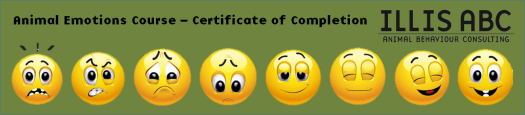
Being positive
Take a look at my new site for more musings about equine training and behaviour. I hope to keep this one as my personal training diary.
I haven’t done much with Mojo recently but he did get a bit cross the other day when I took him out of the field whilst the others horses had been fed, he thought he wasn’t getting anything. So the RAGE system kicked in and he was a bit tense, of course he got his food when got to the yard and I left him in his stable eating hay for a while until he settled down. Mojo’s emotions are often very subtle and I may have missed them a few years ago – before I studied equine behaviour and neuroscience.
So it does pay to learn as much as we can about our individual horses and learn to observe those, often very subtle signs, of discomfort.
Take a look at the Positively Equine site as it has articles on learning theory and the core emotional systems all mammals share.
Mojo Ridden
Mojo was ridden by Liz Hibberd, he was very cool today, we used the “walk on” cue and the target. Then phased out the target and Liz just cued him to walk.
He had one little spook when he trod on his own feathers – I really must cut them again.
He even had a little trot at the end, then lots of praise, scratches and treats.
Liz also sat on Indi for the first time and walked a few steps, we used my hand as a target and then the “walk on’ cue. Indi was very relaxed and we called it a day after a few steps.
Lesson with Jo Hughes
July 30th 2017
I had to a brilliant lesson today with Jo, Mojo still is not 100% OK with someone on his back and walking at the same time. So it back to the dummy rider and lots of SD and CC to weight and things flapping about.
The first video he is learning to stand still at the mountng block and not try to turn round for the reinforcement.
The second one is him targeting the cone so he takes a step forward, he was tense and a little worried by this and spooked twice – once when bitten by a fly and the other time when he touch my stirrup with his nose – my daughter thought he may have been punished in the past for this – as apparently people kick their horses nose away! It never occurred to me to do that. So Mojo may have expected punishment – we don’t know for sure that is why, but he was in a riding school at some point in his life and they may have tried to discourage this behaviour.
Thank you Jo, I now have to remember everything!
Update August
Jo has looked at the videos and thinks the second spook was due to Mojo touching a cone, there was some trigger stacking in play – the fly bit him and he was already at his emotional threshold – the cone touching his leg was the thing that send him over threshold.
There is always a reason for a behaviour – we just need to look closely.
Long/short lining
I long/short lined Mojo for the first time this year. He was so relaxed and attentive. We only did a short session as it was very warm and humid. I set up the cones so he could walk from cone to cone. He seems to have learned to count to 4 now. I count down 4-3-2-1 bridge and treat. Must try next time with the cones in a straight line and gradually position myself further back.

2017 and onwards.
What will 2017 bring?
I am studying to be an equine behaviourist but so far am unsure whether I want to practice as a behaviourist. The equine part of the equation seems to be the easiest component. Changing peoples long held believes is very difficult, so many don’t even understand the basics of how animals learn. I don’t blame the average horse owner as they are not taught this at riding schools or even in colleges at diploma level.
If people are using pressure to motivate horses they need to understand that it is the relief of that pressure that reinforces the behaviour. This is basic negative reinforcement but I did not learn about this from the British Horse Society or even when I was doing natural horsemanship. I did learn that it is the release that teaches the behaviour but not that it was the use of an aversive stimulus nor was negative reinforcement ever mentioned.
It was only when I investigated clicker training that I learned about positive and negative reinforcement. The more I learned the more convinced I was that positive reinforcement is better for the emotional health of the horse, it gives them a choice. They can say “no” instead of being too afraid to object due to the adverse consequences of non-compliance. Even when I was doing natural horsemanship the horse was not allowed to walk away as this was seen as being “disrespectful”.
Benny taught me so much – he was very adept at escaping the escalating aversives and he introduced me to positive reinforcement.
Mojo is teaching me even more, horses can teach us so much, if we listen, than any human can.
We do not need to subscribe to any particular genre of horsemanship, we need to learn as much as we can from as many sources as possible. Only then can we truly decide what is in the best interest of the horse. To be blinkered or brainwashed by clever marketing is very limiting but unfortunately very common.
So I do find the human animal very hard to understand – it is the human who has to change if the horse is to have a better life.
Holidays
Just back from Devon where I was reunited with Benny. We rode out a few times and did a little in the school. He hasn’t forgotten how to target, or side pass at liberty, even though I haven’t done anything like that with him for 2 years.

Emotions
This topic as been covered before but it is always worth revisiting.
According to Jaak Panksepp there are 7 basic emotional systems all mammals share.
What do we need to engage in training our horses?
SEEKING/desire system, PLAY/social engagement system and CARE/maternal system.
What do we need to avoid triggering?
FEAR/anxiety system, RAGE/anger system, GRIEF/separation anxiety system
Seems so simple but it is so easy to induce frustration in training, the horse will SEEK a reward by performing a behaviour and if we are late in rewarding a desired behaviour or the behaviour is one we don’t want and we ignore that behaviour, the horse may become frustrated. This is often the point people give up trying to use positive reinforcement.
Of course we can use negative reinforcement e.g pressure/release, and even positive punishment, in our training and insist our horses do as we ask. We can use pressure without it being aversive/uncomfortable for the horse but we need to be careful to monitor their emotional state. Each horse is different and we need to adjust our training to suit the horse.
Recently I saw a post where the person said that sometimes if we pick up a stick or whip it doesn’t have to be the object that is a threat but that the persons body language may change (e.g if the stick gives them more confidence). Interesting thoughts on very a controversial subject, are tools an extension of ones arm with no threat potential, just like a guiding hand? Or is it a threat – do this or there will be a negative consequence? Only the horse can say for sure, but we can look at their emotional response to our training methods and allow them to say “no” if they feel uncomfortable with our request.
My one problem is this – as horses have emotions just as we do, is it fair and ethical to force them to do things we want that may not be what they want? How do we know what they prefer, do we give them a choice? I know horses who line up at the mounting block and seem to enjoy going out to explore – activating the SEEKING system.
A very difficult question to ponder and to answer.
Also keep in mind the emotions elicited by the use of negative reinforcement. These are the negative emotions of FEAR and RAGE. An aversive stimulus is something the horse would rather not experience, so the discomfort of a pull on the halter, a whip to “encourage” them forwards. These work by the horse wanting to avoid them, so they comply with our very slight requests – what people call light or subtle aids.
As I have said before fear does not have to be the full blown flight response – the other signs of the FEAR system are freeze, fight and fidgeting.
The fidgeting can be divided in to appeasement behaviours and displacement behaviours. So the horse who can’t keep his feet still, the horse who snatches at grass in an abnormal way, the horse who can’t give us 2 eyes, the horse who lowers his head in an attempt to say “look I am not a threat”.
All these are worth thinking about especially as the International Society of Equitation Science have a huge influence over training and welfare, but also advocate the use of negative reinforcement in the initial training of horses. Although I do find their statements confusing as they have this after the paragraph explaining operant conditioning:
”WELFARE IMPLICATIONS: The use of pressure/discomfort has the potential for serious welfare implications that range from escape, aggression and apathy to learned helplessness.”
Affective neuroscience of the emotional BrainMind: evolutionary perspectives and implications…
Cross-species affective neuroscience studies confirm that primary-process emotional feelings are organized within primitive subcortical regions of the brain…
ncbi.nlm.nih.gov
PS I work with a wonderful set of people doing equine assisted learning, the horses always have a choice, if they start looking at all uncomfortable or stressed they are removed from sessions and given a break. Horses do pick up on our emotions and we do need to know our own horses very well and watch for signs of distress and fear/anxiety.
My first sit on Mojo.
Behaviour is information – it is how non-verbal animals communicate. What we do with this information says a lot about us as people and trainers and caregivers.
If we get on a horse who clearly is saying “no” we are in danger of breaking any trust they have in us.
Mojo said “no” a lot when I got him, “no” to the mounting block and “no” to new people, “no” to having his feet trimmed.
It has taken a long time to gain his trust and to get on him too early would have damaged that.
Last week he had his feet trimmed by a new farrier and although a little unsure at first soon relaxed and gave the farrier his feet.
He also comes voluntarily to the mounting block and isn’t so afraid of new people.
Yesterday was the first time I have sat on him. That is all I did sit and walk 2 or 3 steps forwards. Rewarding every step and giving him a lot of fuss and reinforcement. I dismounted without any finess and he was fine with that too. So a big jackpot for all that and back to his stable for his feed.
When Liz sat on him the first time, a few months ago, he shot off and didn’t look relaxed, yesterday was totally different.
He stood nicely for his tack and even a breast plate was not an issue. That is for my benefit as it gives me a little more security with something to steady myself, if he gets frightened by environmental factors at any time.
The new yard is quiet and he is in a herd – a new one now as Smoke wouldn’t let him join his gang.
 Positive Horsemanship.