Connection Training Clinic Day 1

A few thoughts about the recent clinic in Essex.

We gathered in the stable block and talked about the areas we wanted to work on either at the clinic (for those with horses there ) or at home for the auditors.

There were a variety of issues discussed:

gaining trust
getting more whoa
getting more go
desensitisation to nasal spray
bridling a slightly head shy horse
a competition horse who went over threshold at a dressage event due to horses round the arena approaching from the right side
a horse not interested in treats or training in hand in general
even the venues owners own horse who didn’t like the arena

Getting motivation was quite a key topic, making it worthwhile for the horse to want to target objects or to stand at stationary targets. Not to be stingy with the reward!

The first session was working on getting the horse to calmly target the target stick – all the participants had a history of using reward based training. It was therefore building on and refining what they were already doing.

The session on getting more whoa was interesting as the horse seemed very calm and most unlikely to be a “bolter”. I put bolt in brackets as true bolters I think are in an extreme state of fear and not just enthusiastic and strong out hacking. Sometimes we inadvertently cause them to get over aroused – excited, especially in the company of other horses.

Shawna worked on using the target to get the horse to move and then stopping and targeting – click and treat for the stop – then add rein cues to the process. The horse got a bit confused when the rider clicked as he was still looking to Shawna as the person with the treats.
At the end of the session the rein cue had begun to mean stop.
This same horse needed to be given a nasal spray, so the process of desensitisation was discussed and he got used to having his nostrils touched but there was more work to be done on another day.

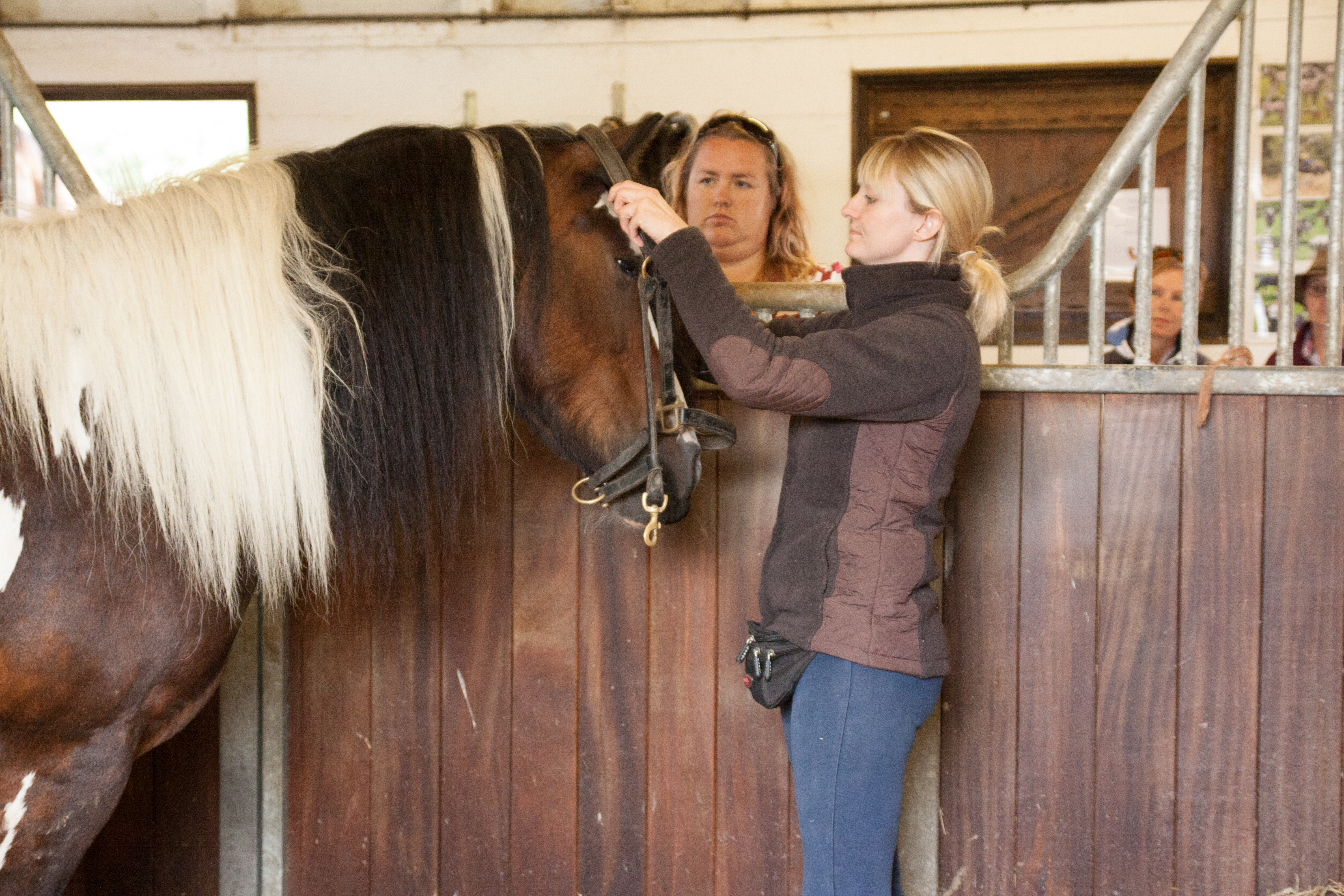
The horse with bridling issues was the one with going forwards in the school issues. Shawna worked with the horse in the stable with the owner using a leather head collar at first, gradually introducing the noseband over the nose. Desensitising to the whole process, still more sessions needed to get it solid but the horse seemed less anxious about the bridle in the end.
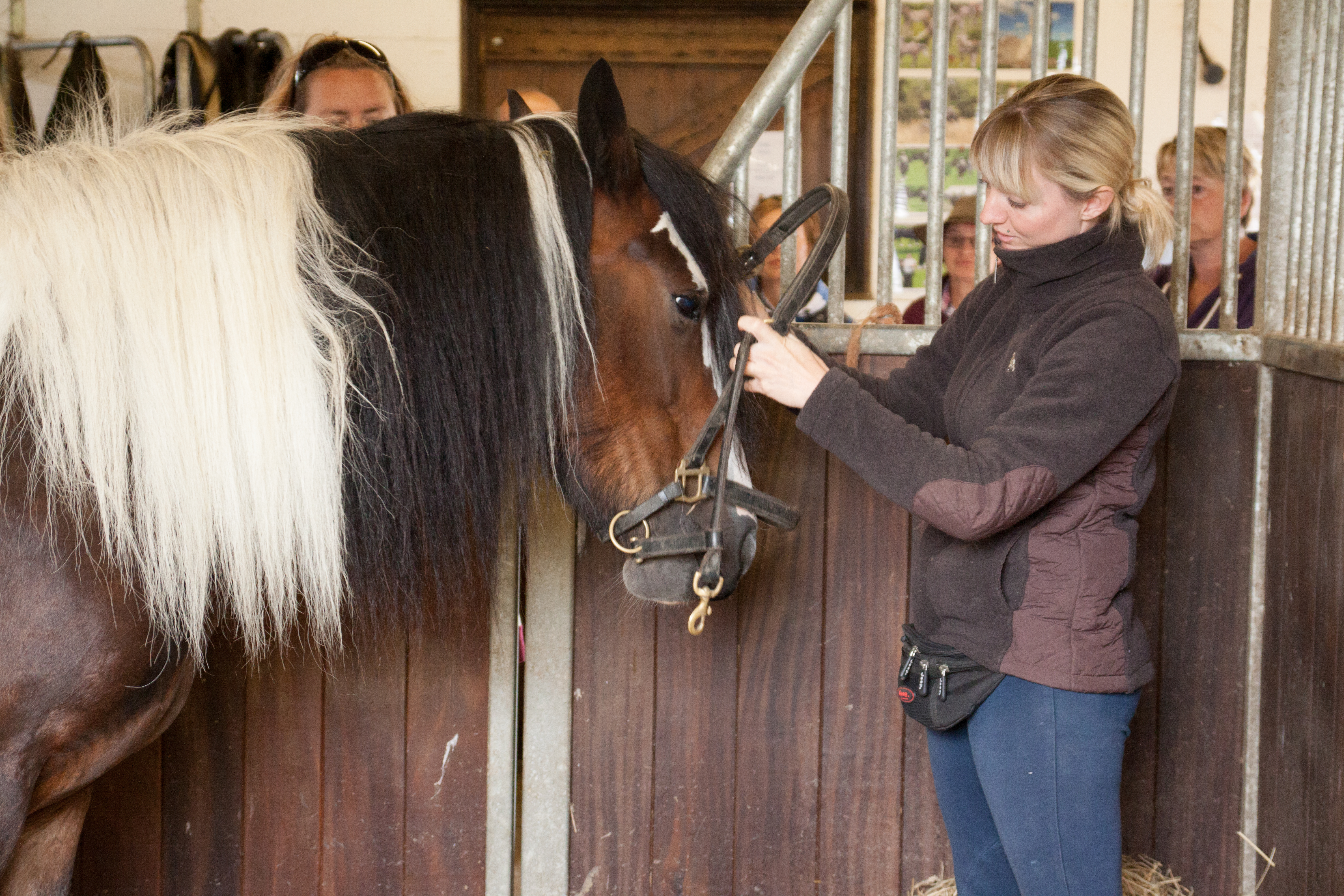
horse being bridledtraining a horse to be bridled


Next into the arena with the same cob – the problem was the rider wanted more forward motion with out escalating pressure. Shawna had the horse moving towards a target pole and the rider clicked and treated for the slightest forward movement.

The horse with the anxiety issues when horses or people approached from a particular side was interesting. The owner said eyes had been checked but a few people thought there may have been a more physical issue than a purely behavioural one.
Shawna had the owner with the horse online on the good side to start taking him to the side of the arena were the audience was. Several people stood up and moved as the horse went by, not much reaction on the supposed good side Changed the rein and did the same thing – a bigger reaction on that side but not overly spooked.
Clicked and treated for any calmness as he passed people. The one person went outside the arena and stood on a chair, as the horse went by she waved her arms – and the horse did a major spook and looked quite panicky. He was rewarded for being calm – he did calm down quite quickly. A few more circuits with less extreme movement from the person the other side of the hedge, gradually resulting in the horse being calmer and calmer. This too was a form of desensitisation.

Then the resident horse who seems to dislike the arena. The target was used to get him calmly walking round the arena. Gradually getting him closer and closer to the scary corner!

Shawna seemed like a magnet for the horses and sometimes the owners had difficulty getting their horses attention back to them. Shawna did move from the horse area to the spectator area a few times, with lots of breaks for the horse in between chunks of training.

What I learned from day 1 – take things at the horses pace, don’t be a greedy trainer and ask too much or too soon. Give the horses time to process and calm down after a short session. Don’t be stingy with the rewards either, jackpot after a session and leave the horse with a good feeling. Timing is everything, click/bridge for the behaviour your want at exactly the time the behaviour occurs.

A few photos from the day are on Facebook – the rest are in a Photobox gallery.
Facebook images

RIP Kit

As it has been a bit emotional for us all I forgot to write about losing Kit. kit was 28, arthritic and had developed Cushings disease. All under control and she seemed happy – I had brought her nearer home to a yard she had been to before and had spent a lot of her years enjoying. After settling in and finding a feed she would eat she put on weight and enjoyed a little light exercise in the school and around the woods.
As she was so well schooled and knew all verbal cues I let her say when and if she wanted to trot and canter.
During her last 2 weeks she began to head shake quite violently – I tried face masks, extra fly repellent thinking that may be the cause. The vet took bloods and they came back normal.
One morning I got a phone call saying she had fallen over in the stable and couldn’t get up. The vet was on the way and all the yard staff were with Kit. The vet gave her painkillers but still although she tried Kit could not get up. Liz, my daughter was working locally so managed to get to the yard before the vet put Kit to sleep. Kit had been Liz’s Pony Club pony, the pony she shared lots of emotions with when younger. Kit excelled at everything, dressage, jumping x-country. Even turning a hoof to endurance riding at the age of 24.
The vet thought the head shaking may have been brought on by a brain tumour, as a grey pony she had a lot of melanomas and possibly internal ones too. There were no reflexes in the hind limbs, so it was the only choice.

We will remember the good times we had together – from the first dressage test I did on her, as 5 year old, where we spent more time jumping the dressage boards than doing the test and gained a mark of 48%; to one of the last tests Liz did at Oldencraig (a large local dressage yard) where Kit beat all the very posh warmbloods to win with a score of 72%.

More recently she had been a therapy pony for Equine Partners CIC, and equine assisted learning centre in West Sussex run by Liz’s sister-in-law and mother-in-law.

Relaxation

A non horsey friend came today for a little ride on Benny, we got some good trot sessions from a verbal cue and with him following my hand held target stick. My friend was surprised that positive reinforcement was not the norm in horse training, she has a background in special education schools so is well versed in the use of positive reinforcement.

My instructor was also surprised as I bridged and treated Benny for going past some scary jumps in the corner of the school during my lesson on Monday. He spooked at them and I took him up to have a look, bridged/treated as he relaxed next to them. Rode him past on both reins and bridged etc for calmly passing. Not many people it seems treat from the saddle in the conventional world!

Later when I took him to the field the tractor was moving large bales of straw, a bit scary but he targeted my hand and stood beside the tractor and even tried to touch it, bridged/treated and carried on to the field.

Benny Lessons

I am maintaining my position at all gaits, shoulder in is easier and Benny offered canter as I came off the corner. Only on the new yard for another 2 weeks or so and need to make the most of our time here. Benny has been a super star and had novice riders on him plus children and he takes it all in his stride. Looking forward to a few little hacks before going back to the field.

Lesson

Benny and I had a good lesson with a BHS instructor, concentrating on getting me sitting in the correct position. It is surprising how often we fall into bad habits and need reminding to sit up and look where we are going. Benny certainly appreciated being ridden properly and was extending nicely.

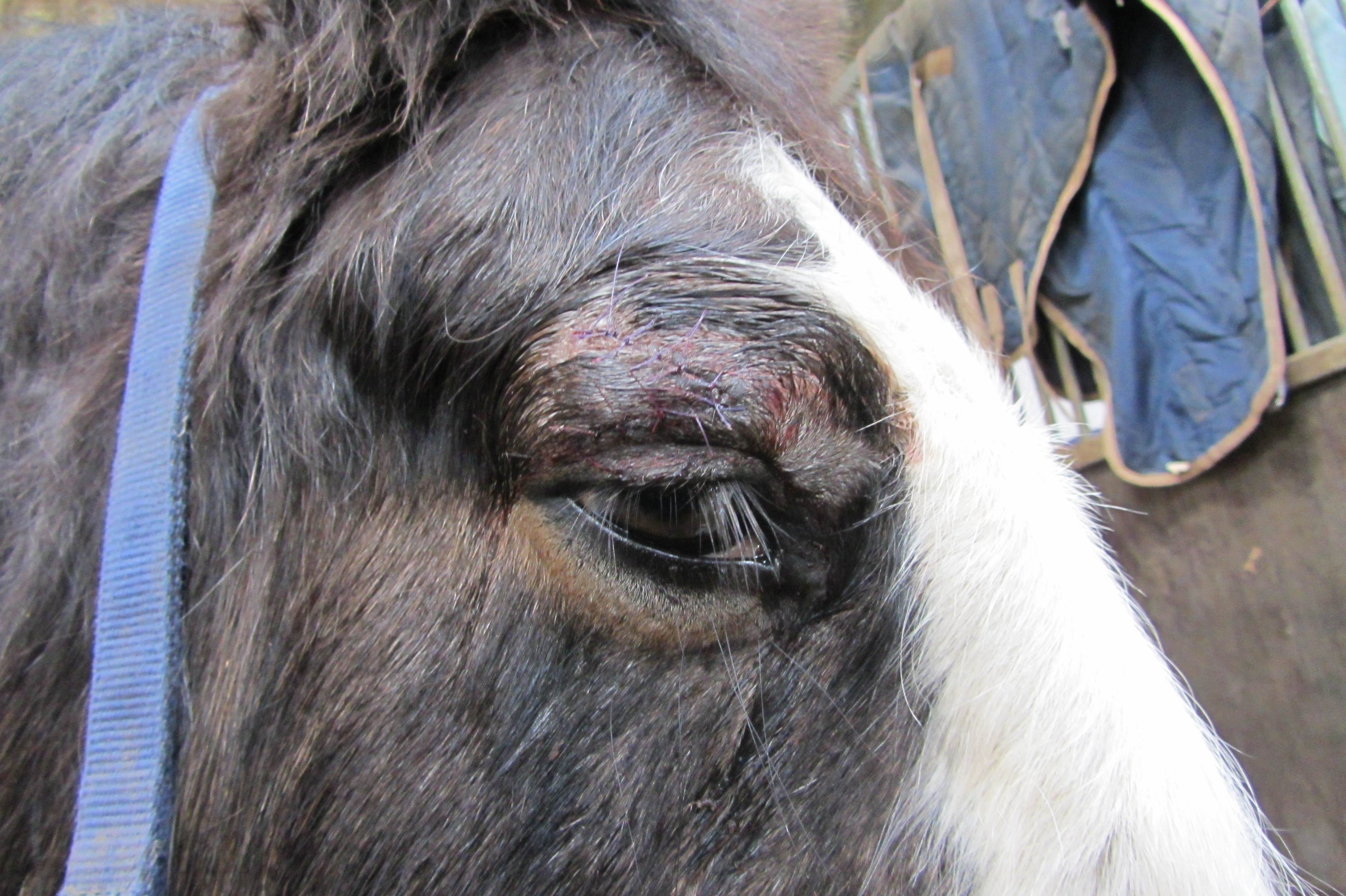
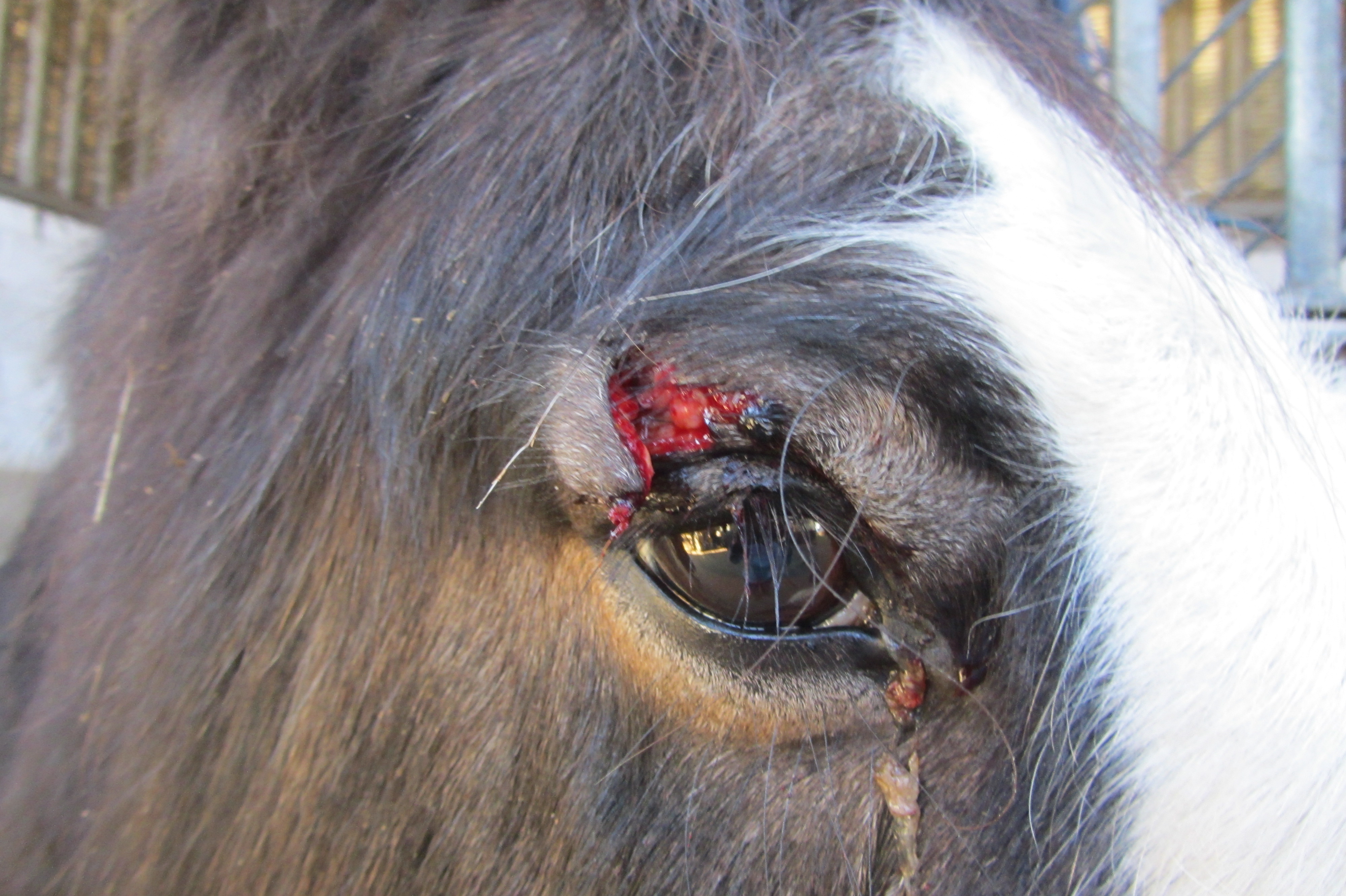
The next day however Benny managed to find the only sharp edge in his stable and cut his eyebrow. A big flap of skin had to be sewn back into place. I am so pleased that I had done all the desensitisation with needles and injections. He was excellent as the vet sedated and injected local into the wound site.

Bennys eyebrow before suturing
Benny’s eyebrow before suturing.
Benny's eyebrow after suturing.
Benny’s eyebrow after suturing.

Therefore it was 2 days before I got back on him. My cinch was a little loose so had to get off and fiddle about then get back on. Benny was less than impressed as he thought the first trot round the arena was all he was going to do!

He is very settled in hie new home now and didn’t even flinch when a pigeon flew off the fence right next to him. He watched the dog walkers with no reaction either. We just did a few trot circuits and circles but it is a start of getting us both fit again.

New Yard

I have moved Benny and Kit to a yard with a sandschool but have to stable them at the moment. They have a little turn out area they can go to kick up their heels but it is not ideal. At least they are dry now and I can begin to get them clean and get some weight on Kit. Benny was a bit anxious on first arrival, yesterday I took him for a walk inhand to explore the place. He stopped and looked and sniffed at everything – I bridged and treated for the touching of objects – jumps in the sandschool were a bit strange (with ducks as fillers). In the afternoon another visit to the school and all was calm he offered sideways over a pole so I accepted – he likes doing that. I led him round and he followed my hand as a target. We did a few traveling circles like that – he made no attempt to leave. Today I will take my saddle and if he feels calm I will ride him in the school. I am reading Stephanie Burns book “Move Closer, Stay Longer” just what I need. Walk him round until we are both relaxed, breathing and connected. He is much less reactive than Kit ever was – so it is my brain that needs rewiring.

Update – Benny was good, mainly walked with a little trot. There was another cob ( his next door neighbour) in the arena going round at great speed and jumping. He didn’t worry, 2 little spooks at pigeons and flapping fence tape. We stood in the corner whilst the other horse jumped – it was a little lively. The horse cantered past both ways Benny just stood and watched. Hope to increase the time and speed over the next few days. I bridged and treated him for standing still and for relaxation. He even stood still when the yard dog barked at him.

Terminology

An interesting note on Facebook about the terms people use to describe some horse training techniques. Some describe the release in pressure/release or the retreat in approach and retreat as a reward, this makes it more acceptable but is not correct. The release follows the addition of an aversive stimulus and is at the best relief but not a reward, it is negative reinforcement in that something the horse finds aversive is removed.

I must remember to use the correct terminology as well. Some groups on Facebook get very upset when I say that what they do is negative reinforcement, some admit they use it but don’t think positive reinforcement works for horses.

Personally I think we can use all quadrants of operant conditioning in training but keep the negative reinforcement as a safety measure, or use non-escalating pressure (e.g tension on a lead rope with no increase in pressure – just waiting until the horse relaxes or moves forward). Also the positive punishment can be used in extreme circumstances if it averts a dangerous situation.

New books

I received books about clicker training for Christmas – Alexandra Kurland’s Clicker Training for your Horse is excellent. Lots of sensible advice on using all quadrants of operant conditioning.
There is usually more than one solution to a problem, so the more tools we have in our tool box the better we are able to solve problems. Whether this is positive or negative reinforcement, or redirecting or counter conditioning we can decide what the best way is for our particular animal.
As my daughter has just acquired a foal all this information will be very useful. Many chapters are on foal and young horse handling.
So now after a festive family Christmas I will be off to the field to do more target training. Also I won’t chastise myself for using a little light negative reinforcement – using tactile cues e.g leg aids. What I don’t like is the escalation of pressure to elict behaviour, we now know there is a better way.

Animal Learning Theory

Animal Learning Theory

Animal learning theory is fascinating, I have read a lot about it but never really understood the different components. It is not a training method but can be used to construct or deconstruct a method.

Max Easey did a course for a group of us in West Sussex and we all went home with lots to mull over!

Classical Conditioning is learning through association, e.g. a horse will associate the sound of his owners car with the possible arrival of food. Or the wag of a finger can mean if he doesn’t do something an aversive will follow.

Counter – conditioning is presenting something they like at the same time as presenting a mildly fearful stimulus or in an environment they find mildly aversive.g treats and a scary object. It is also called perception modification. The food is only presented once they relax.

Operant Conditioning is learning by consequences:-

Positive Reinforcement – add something he likes as a consequence of performing a behaviour to increase the likelihood that he will repeat it under the same conditions.

Positive Punishment – add something he doesn’t like as the behaviour is happening to decrease/discourage a behaviour.

Negative Reinforcement – add and then take away something he doesn’t like as the behaviour is happening increase the likelihood that he will repeat it under the same conditions.

Negative Punishment – take away something or deny access to something he likes to reduce/discourage a behaviour.

All have pro’s and con’s, negative reinforcement e.g pressure/release has consequences for our relationship with the animal if we apply an aversive.

Positive punishment is also detrimental if we are associated with the aversive as we add something he doesn’t like e.g. a whip if he finds that aversive. A whip can be used as a target and not be aversive. Can cause fear which may lead to aggression or depression.

Negative reinforcement – where you put pressure on the animal as an aversive then take it away when he performs the behaviour harms the relationship if the animal looks on you as all or part of the aversive element.
An example would be back up – we ask for a back by making it uncomfortable for him to go forward – the degree of pressure used depends on where on the motivation scale the stimulus is in relationship to other motivations, so may need to be escalated. This is aversive otherwise the animal would not move, on the slightest move back the pressure is released to gain relief from the aversive. So eventually a wag of a finger makes him go back – this is so he avoids the aversive element. Likewise the draw towards you works because he considers you aversive so when you go back he feels relief when you remove yourself if you are the aversive.
Negative reinforcement can cause resentment and aggression.

This is not what I want with my horse so will be exploring positive reinforcement and negative punishment. So I reward the tries and behaviours I want and ignore and withhold the rewards for unwanted behaviour.

Timing is crucial with every motivator, as the animal needs to know immediately the consequence of his actions. All motivators (even positive reinforcement and negative punishment) can cause frustration if the animal doesn’t get what he wants.

Some mild steady pressure can guide him to the solution but it is better for him to investigate and find the answer for himself or use a target.

There will be times when in a extreme situation negative reinforcement/positive punishment may be needed for safety.

I will add more as I explore the bridge and target training with the horses.

Smoke and the bridge

Good session bridge training with Smoke – my daughters youngster. Went to catch him and he waited until I was about a foot away and came to meet me. Yesterday he just walked off as soon as I was anywhere near.
Took him to the arena and let him loose – he followed me to the gate and I went outside the arena and stood by the gate. He was calm and I bridged and he looked away fairly quickly to get his treat.
Next I introduced a target – he wasn’t sure about this and backed off. I stood quietly holding it and let him come to it, bridged for just sniffing and treated when he turned his nose away. He had a few moments of trying to get a treat but I walked away and let him calm down. He is still not sure of the target but he did touch it a few times so I left it there and went back in the arena, he stood next to me – no mugging and I gave him a few more treats. Then we walked back out into the field and I left him with some treats on the floor.

Hope this improves over the next few days – he didn’t walk so close today – usually he has his nose on my arm. Very pleased with Smoke, must not ignore Benny though.